Capacity
Service Bays Are Full
RO volume is capped by physical bays, lift count, and drive-lane flow — not demand.
For Auto Dealers · Auto Groups · Fixed Ops
Plan a steel building around service capacity, customer flow, drive lanes, reconditioning, storage, and future growth — without settling for a generic metal building template.
No obligation. Itemized quote. Clear next steps.
What Dealers Are Up Against
Capacity
RO volume is capped by physical bays, lift count, and drive-lane flow — not demand.
Image
Customer-facing facilities need to support the dealership’s image, not undercut it.
Flow
Reconditioning, storage, and staging compete for space that was never planned for them.
Clarity
Comparing steel building offers is hard when scope, inclusions, and exclusions aren’t spelled out.
Automotive Building Types
Customer-facing structures with glass frontage and brand-standard finish.
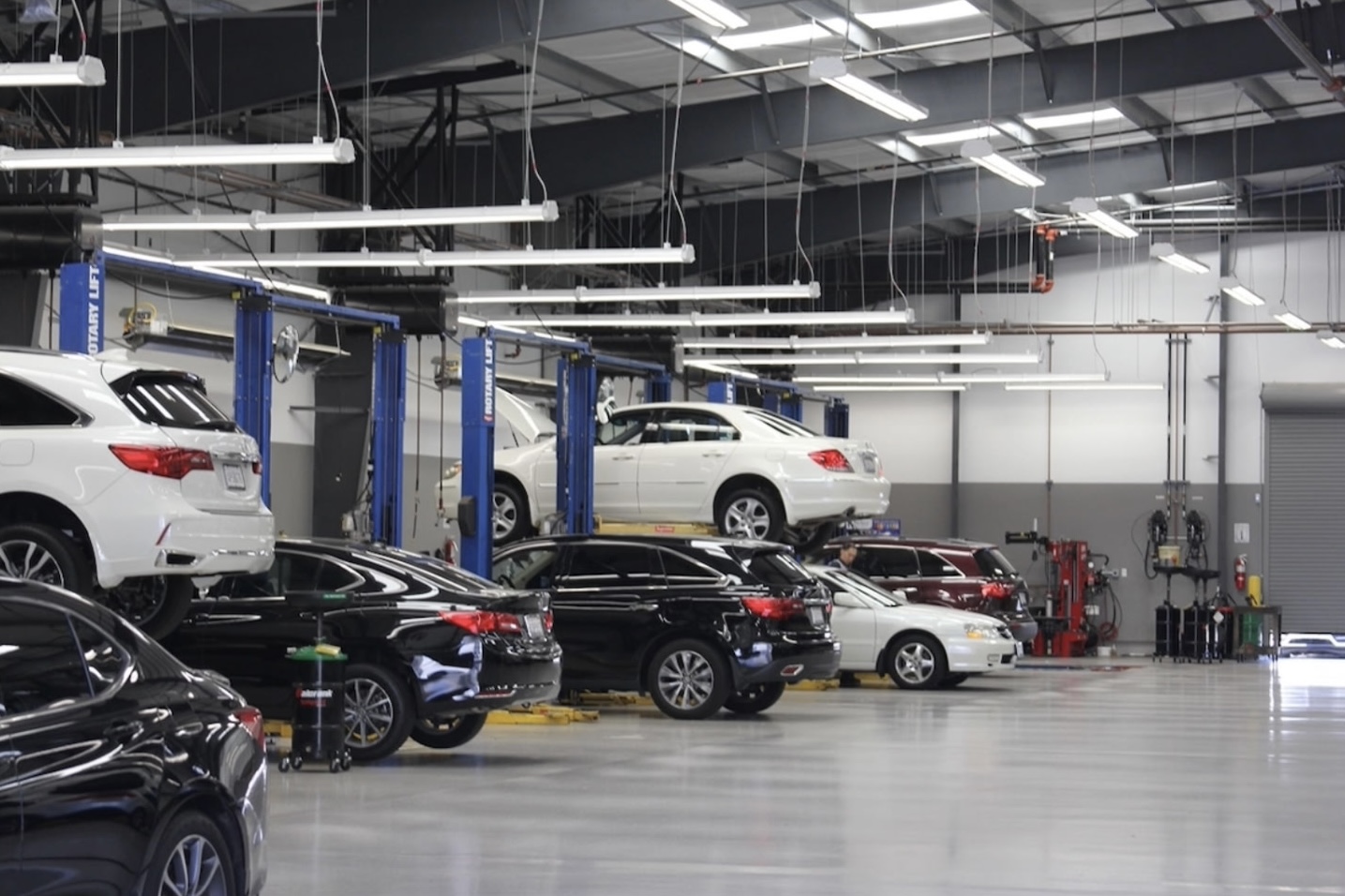
Bay counts, lift spacing, and drive lanes planned for RO throughput.
Dedicated recon space that gets used inventory front-line ready faster.
Organized, secure parts space sized to your inventory operation.
Protected storage for inventory, fleet, and customer vehicles.
Showroom, service, and storage combined in one planned structure.
Service Capacity
Fixed operations revenue scales with usable bays, lift positions, and how smoothly vehicles move through the building. A facility planned around your service process — intake, drive lanes, lift spacing, parts proximity — supports the business model instead of constraining it.
That’s why the planning conversation starts with how your operation runs today and where it needs to be, not with a standard template.
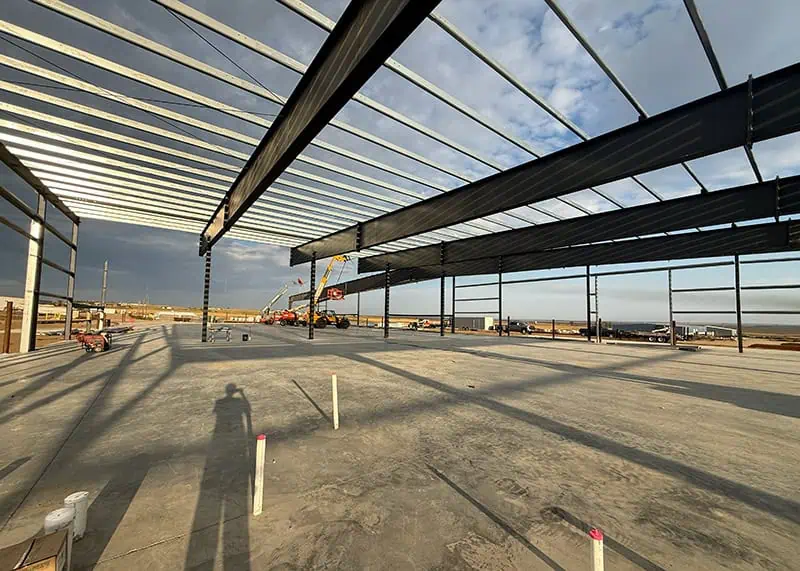 Steel frame construction
Brand Image
Customer-facing facilities carry brand expectations — entries, glazing, finish level, and a clean exterior that fits the rest of the campus. Steel construction doesn’t mean settling on appearance; it means planning the customer-facing zones deliberately.
Where OEM image standards apply, raise them early in the scope conversation so the configuration accounts for them from the start. [CLIENT TO CONFIRM how OEM image program requirements are handled]
See Dealership Configurations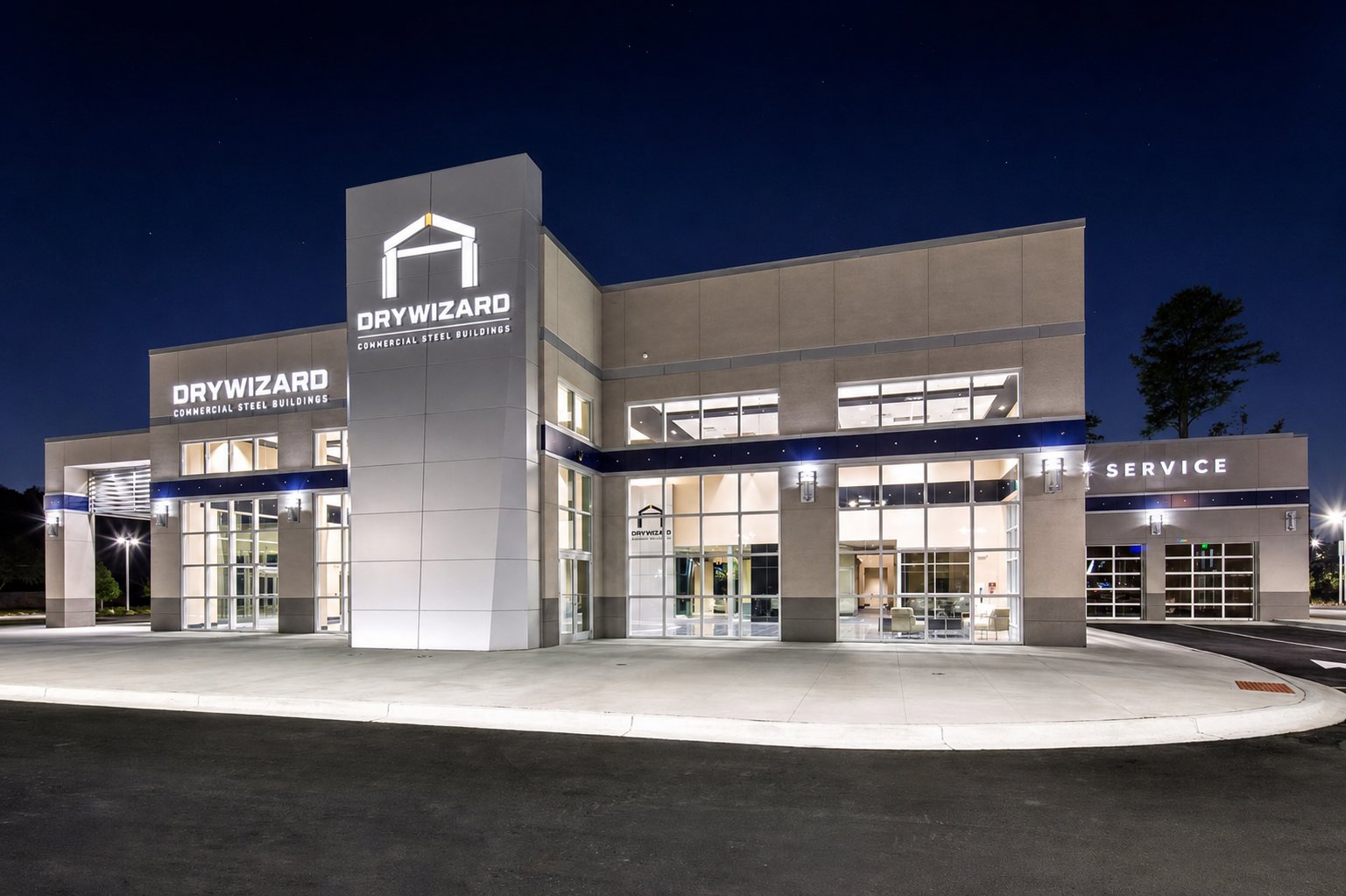 Glass-front facility
Configuration Concepts
These are configuration concepts that show how dealership facilities are commonly planned — not completed projects.
Service
Drive-through lanes, lift rows, and a customer intake zone.
Recon
Detail, mechanical, and staging zones in one clear-span structure.
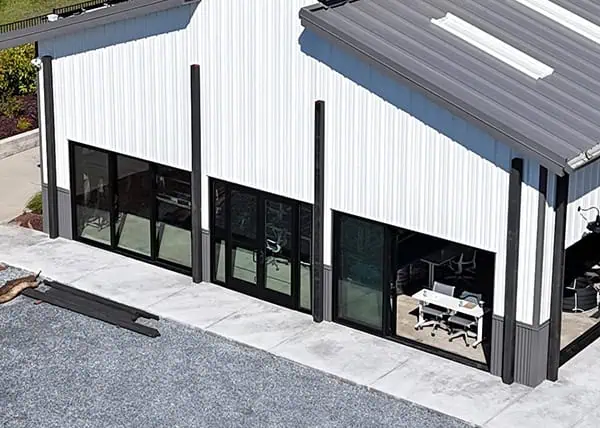
Mixed Use
Glass-front showroom with service bays planned behind.
Dealership FAQ
Yes — that’s the starting point. Bay count, lift spacing, drive lanes, intake flow, and parts proximity shape the scope before the structure is quoted.
Customer-facing finish — glazing, entries, exterior treatment — is planned into the configuration. Raise any OEM image program requirements early so they are addressed in the scope. [CLIENT TO CONFIRM how OEM requirements are handled]
Phasing and site logistics are part of the scope conversation. The goal is a plan that respects your operating calendar. [CLIENT TO CONFIRM specifics of project coordination]
Yes. If expansion is on the roadmap, say so up front — frame lines, end walls, and site layout can be planned so phase two is an extension, not a rebuild.
An itemized written scope: what’s included, what’s optional, what needs confirmation, and what’s excluded. No guessing.
Tell us about your service volume, your site, and your growth plans. We’ll bring the structure and the clarity.